What better way is there to experience the Khumbu (Everest) region than to summit a peak after visiting the famous Everest Base Camp (5,380 meters)? Island Peak (6,189 meters), commonly known as Imja Tse, is one of the best and most popular peaks to climb in Nepal. The high peak towers over Sagarmatha National Park, the highest national park in the world. During this nearly 20-day epic adventure, you will see the world’s highest mountains from dozens of perspectives, getting the best views of Mount Everest (8848m) and more.
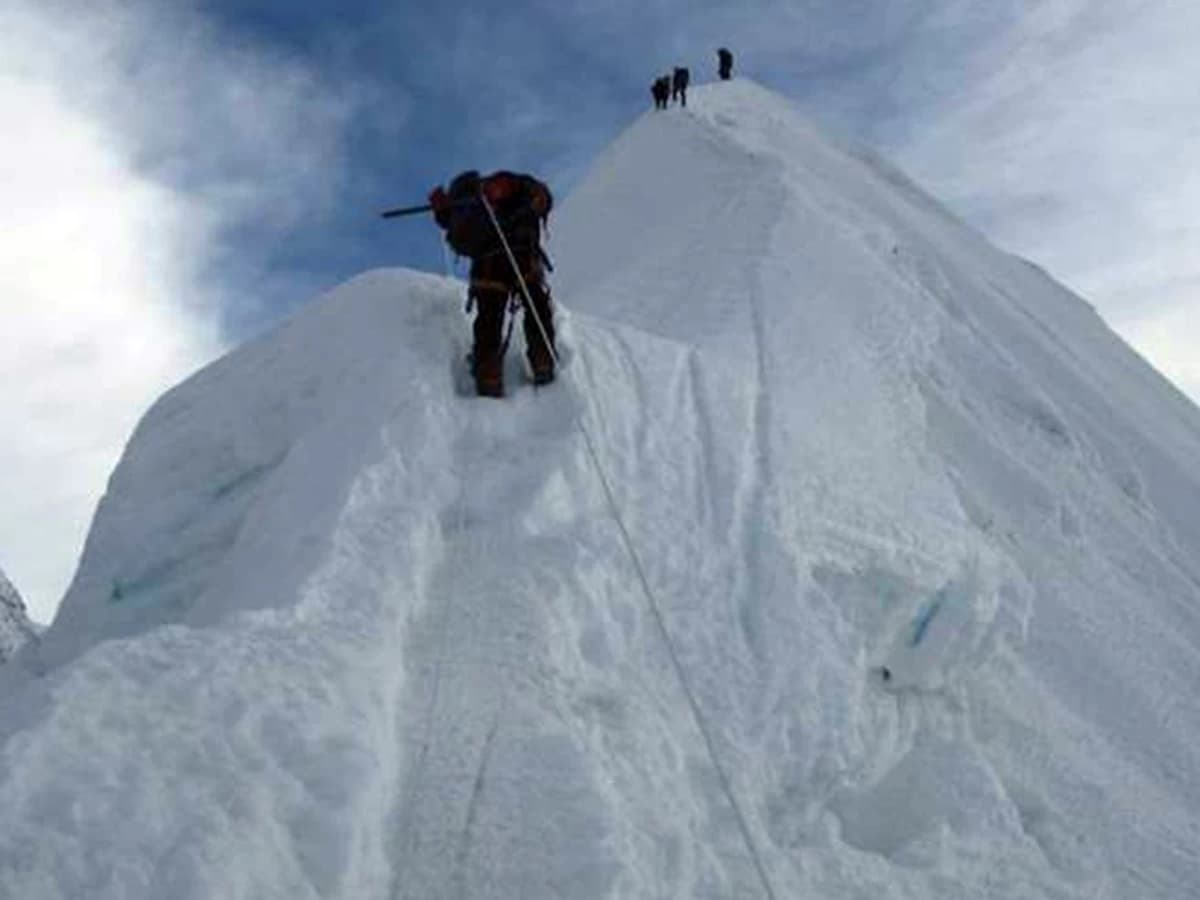
Imagine yourself walking on snow and ice along the narrow ridge up to Island Peak. The only things holding you to the mountain are your crampons and the fixed rope. With your heart pumping, take step by step up the mountain ridge up to the summit. There are few greater thrills in life than summiting a Himalayan peak. Equally powerful is the well-deserved feeling of accomplishment when you make it to the top and safely back down. It is not every day that you get to climb a mountain, let alone one in the renowned Everest region.
Before ascending through the desolate, winter wonderland, there is some trekking to be had – about a week and a half of much needed acclimatization. Begin the adventure by flying to Lukla, a proper start to any Everest region trek/climb. Hike up to Namche Bazaar – a Sherpa center for trade and tourism. Stroll the streets of bakeries and handicrafts as you spend the day acclimatization.
Take a half day to explore Tengboche Monastery and receive some good luck blessings for the upcoming peak climb. Within days, you will be standing at the base of the world’s tallest mountain, after trudging through the barren mountain landscape of Lobuche and Gorakshep. The day after base camp, hike up to Kala Patthar (5,545 meters), the absolute best view of Everest on the Everest Base Camp trial.
After days of proper acclimatizing, it is time to get ready for the final ascent. We set up camp at Island Peak Base Camp (5,200 meters). Sleeping outside amid the highest peaks on the planet is quite the sensation. Before the first light of the day, we wake up and prepare for the summit. While it is still dark, we head towards the top. When we reach, we are full of smiles. Meditate on the beauty of this moment and take photos to remember it. From here, we head back down to Lukla, ecstatic about our successful climb. In Kathmandu, we host a celebration for you with the team.
It is possible to climb Island Peak all throughout the year, though there are certainly better times than others. The most suitable times are spring (March to May) and fall (September to November). These seasons provide the best weather and the clearest views. Beyond that, the safest climbing conditions are during these times. Ashmita Trek and Tours arranges the climb with full management, including transportation, meals, etc. Please do not hesitate to reach out if you have questions!
Highlights
- The feeling of arriving to the top of Island Peak (6,189 meters) and the views that come with it.
- Explore the markets of Namche Bazaar and learning about Sherpa culture.
- See the most astonishing view of Mount Everest from Kala Patthar (5,545 meters).
- Trek to the historical Everest Base Camp (5,380 meters), from where Everest expeditions leave.
- Learn about Sherpa culture and hospitality.